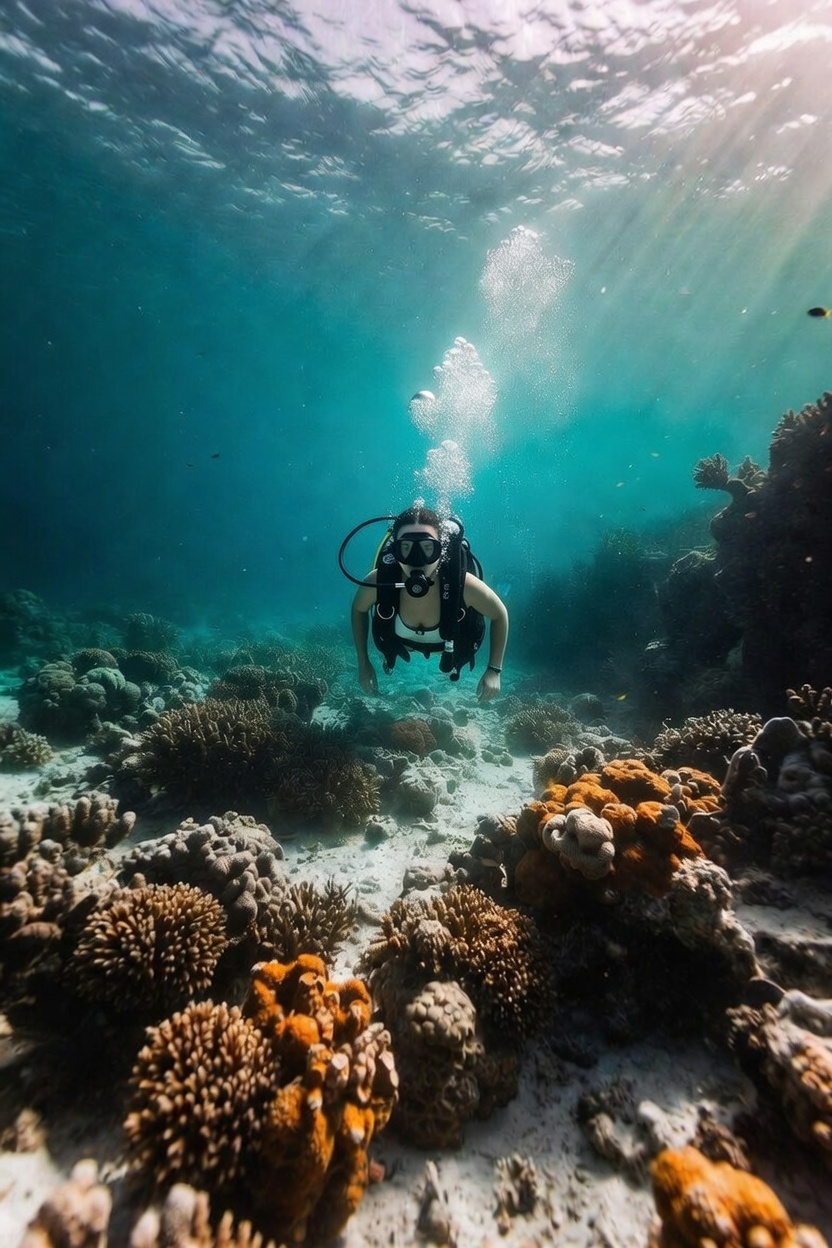
Beyond the Blue: Understanding the Ecosystem of Arrecifes de Cozumel
While many come to Cozumel for the “drift,” the real magic lies in the structural complexity of the Mesoamerican Barrier Reef. As the second-largest reef system in the world, the section surrounding Cozumel is unique due to its deep-water drop-offs and intense nutrient exchange.
At Blue Mayan Divers, we believe that the more you understand the reef, the more incredible your dives become. Here is a breakdown of the biological and geological wonders you’ll encounter in the Cozumel National Marine Park.
The Three Zones of Cozumel’s Reefs
Cozumel’s underwater topography is divided into three distinct zones, each hosting a different community of marine life:
1. The Inner Lagoons & Shallow Gardens (15–35 ft)
Sites like Palancar Gardens or Chankanaab are characterized by “patch reefs.” These are dominated by Elkhorn and Staghorn corals.
- The Vibe: High sunlight, vibrant colors, and nurseries for juvenile reef fish.
- Look For: Sergeant Majors, Yellowtail Snappers, and the endemic Cozumel Splendid Toadfish hiding in the rubble.
2. The Intermediate Terraces (40–70 ft)
This is where the famous “Spur and Groove” formations occur. Massive ridges of coral (spurs) are separated by sand channels (grooves).
- The Vibe: This is where the current starts to pick up.
- Look For: Brain Corals the size of small cars and Giant Barrel Sponges (Xestospongia muta).
3. The Outer Walls & Drop-Offs (80 ft+)
The “Wall” is a vertical limestone precipice that plunges into the abyss. At sites like Santa Rosa and Columbia Deep, the wall is decorated with deep-water fans and black corals.
- The Vibe: True “Inner Space” feeling. The water turns a deep, electric indigo.
- Look For: Hawksbill turtles resting on ledges and Eagle Rays cruising the upwellings.
Cozumel’s “Engine”: The Current and the Coral
Why is the coral here so much bigger than in the rest of the Caribbean? It’s all about the Cozumel Channel Current.
- Nutrient Delivery: The constant flow of water from the south brings a steady supply of plankton, feeding the polyps.
- Self-Cleaning: The current prevents sediment from settling on the coral, which would otherwise “smother” it.
- The Result: This allows for the growth of massive Agaricia (Leaf Coral) and Montastraea (Star Coral) colonies that form the “towers” we swim through.
The Species You Won’t See Anywhere Else
| Feature | Description | Why it Matters |
| Splendid Toadfish | Brightly striped with neon fins. | Found only in the waters around Cozumel. |
| Black Coral | Tree-like structures found at depth. | Highly protected; Cozumel has some of the healthiest colonies left. |
| Giant Barrel Sponges | Reddish-brown “vases” on the reef. | Some are estimated to be over 2,000 years old. |
Protecting the Reef in 2026: Our Commitment
The health of the Arrecifes de Cozumel National Park is our top priority. As a guest of Blue Mayan Divers, you are part of a conservation-first approach. We strictly adhere to:
- The “No-Touch” Policy: Maintaining perfect buoyancy to protect fragile coral skins.
- Biodegradable Sunscreen Only: Protecting the water from harmful chemicals like Oxybenzone.
- Park Rotation Awareness: Supporting the Park’s efforts to give high-traffic reefs time to “rest” and regenerate.
Ready to See the Giants for Yourself?
Reading about the reef is one thing—drifting through its canyons is another. Whether you are a macro-photography enthusiast or a lover of big landscapes, our private guides are trained to show you the hidden corners of these ancient structures.
[Book Your Private Educational Dive Tour with Blue Mayan Divers]
Leave a Reply