Blog

  • How to Choose the Right Scuba Diving Gear for Cozumel

    How to Choose the Right Scuba Diving Gear for Cozumel


    Cozumel is a great place to scuba dive, but it’s important to choose the right gear before you go. Here are a few things to consider:

    • The water temperature: The water temperature in Cozumel is typically between 80 and 85 degrees Fahrenheit, so you’ll need to choose gear that will keep you warm.
    • The visibility: The visibility in Cozumel is typically excellent, so you won’t need to choose gear that will help you see underwater.
    • The type of diving you’ll be doing: If you’re planning on doing shore dives, you’ll need different gear than if you’re planning on doing boat dives.
    • Your budget: Scuba diving gear can be expensive, so you’ll need to decide how much you’re willing to spend.

    Once you’ve considered these factors, you can start shopping for scuba diving gear. Here is a list of essential gear for scuba diving in Cozumel:

    • A mask and snorkel: These are essential for breathing underwater.
    • A wetsuit: This will help you stay warm in the water.
    • A buoyancy control device (BCD): This will help you control your buoyancy in the water.
    • A regulator: This will provide you with air to breathe underwater.
    • A tank: This will hold the air that you breathe underwater.
    • A weight belt: This will help you sink in the water.
    • A harness: This will help you carry your scuba diving gear.
    • A dive computer: This will help you track your depth, time, and other dive information.

    Once you have all of your gear, you’re ready to go scuba diving in Cozumel!

    Call to Action:

    If you’re interested in learning more about scuba diving gear, please visit our website or contact us

    We encourage you to buy your gear online this is the best store: SCUBA.COM

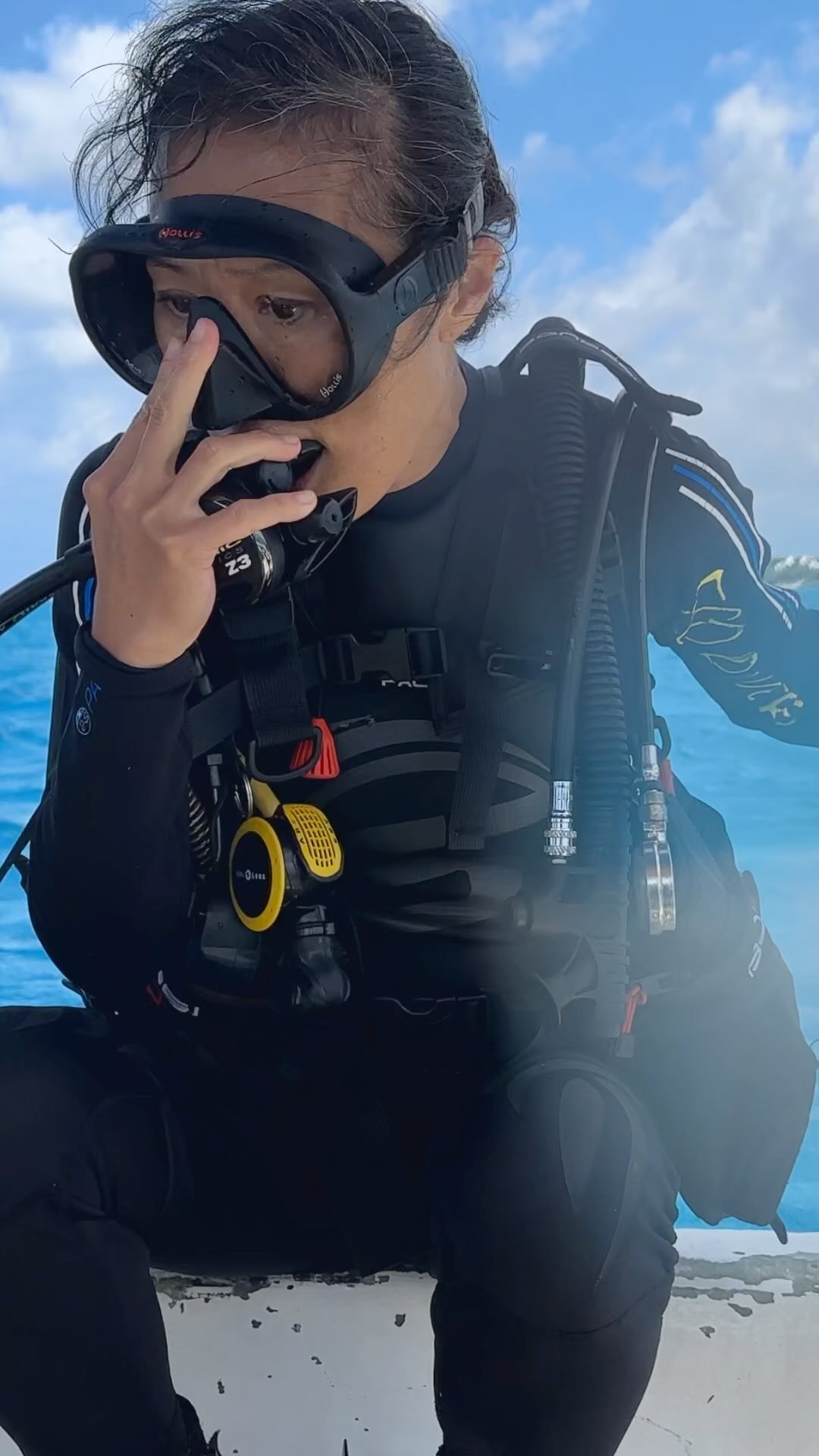
    Woman wearing SCUBA Diving Gear

  • The 5 Best Cozumel Dive Sites for Beginners | Blue Mayan Divers

    The 5 Best Cozumel Dive Sites for Beginners | Blue Mayan Divers

    The 5 Best Cozumel Dive Sites for Beginners

    Cozumel is a world-renowned destination for scuba divers of all levels, but the island’s famous currents can feel a bit daunting for those just starting out. At Blue Mayan Divers, we believe everyone should experience the magic of the Mesoamerican Reef.

    That’s why we’ve curated this list of the 5 best Cozumel dive sites for beginners. These spots offer shallow depths, crystal-clear visibility, and a gentle introduction to the “drift diving” style that makes Cozumel famous.

    1. Paraiso (Paradise) Reef

    As the name suggests, Paraiso is a beginner’s dream. Located just a short boat ride from San Miguel’s main pier, it consists of three separate reef ridges.

    • Depth: 30–45 feet.
    • What to See: Look for the endemic Splendid Toadfish hiding under ledges, as well as schools of yellowtail snapper and the occasional passing stingray.

    2. Palancar Gardens

    The Palancar reef system is massive, but the “Gardens” section is the most beginner-friendly. It offers a spectacular “fairytale” landscape of towering coral pinnacles without the extreme depths of the nearby walls.

    • Depth: 35–60 feet.
    • What to See: Vibrant purple sea fans, giant barrel sponges, and hawksbill sea turtles that are very used to having divers around.

    3. Yucab Reef

    Yucab is one of the most colorful reefs on the island. It’s a low-profile reef, meaning the coral doesn’t rise very high, allowing the current to carry you smoothly over a carpet of life.

    • Depth: 35–50 feet.
    • Pro Tip: Because the current here can be a bit more consistent, it’s the perfect place to practice your buoyancy control while “flying” over the reef.

    4. San Clemente

    San Clemente is a fantastic shallow reef located in front of the southern hotel zone. It is famous for its “coral heads” that rise up from a sandy bottom, providing plenty of nooks and crannies for small creatures to hide.

    • Depth: 30–40 feet.
    • What to See: While the legendary Whale Sharks are usually found further north near Isla Mujeres, San Clemente is a hotspot for nurse sharks, eagle rays, and large green moray eels.

    5. Chankanaab Reef

    Located within the famous marine park, Chankanaab is often used for shore dives and “Discover Scuba” courses because the conditions are so calm.

    • Depth: 30–50 feet.
    • What to See: This site features several underwater statues and a wide array of tropical fish like Parrotfish, Angelfish, and Grunts.

    Ready to Take the Plunge?

    Whether you are completing your Open Water certification or just looking for a relaxed day in the water, Cozumel’s reefs are waiting for you. At Blue Mayan Divers, our experienced guides specialize in small groups to ensure every beginner feels safe, confident, and inspired.

    Plan Your Trip: Book your beginner-friendly dive charter with us today and see why Cozumel is the scuba capital of the Caribbean!


  • The Benefits of Becoming an Open Water Diver

    The Benefits of Being an Open Water Diver

    Scuba diving is an amazing way to experience the underwater world. It’s a great way to get exercise, relax, and de-stress. And, it’s a lot of fun!

    If you’re thinking about becoming an open water diver, here are some of the benefits you can expect:

    • Physical benefits: Scuba diving can help you improve your cardiovascular health, flexibility, and strength. It can also help you lose weight and reduce stress.
    • Mental benefits: Scuba diving can help you improve your mental focus and concentration. It can also help you reduce anxiety and depression.
    • Opportunities: Scuba diving can open up a world of possibilities for you. You can explore shipwrecks, reefs, and other underwater wonders. You can also go on dive trips to exotic locations around the world.

    How to Become an Open Water Diver

    To become an open water diver, you’ll need to complete a scuba diving certification course. These courses are typically offered by dive shops and resorts. The length of the course will vary, but it typically takes about 2-3 days to complete.

    During the course, you’ll learn about the basics of scuba diving, including:

    • Equipment: You’ll learn how to use all of your scuba diving equipment, including your mask, fins, snorkel, regulator, and buoyancy compensator.
    • Safety: You’ll learn about the safety procedures involved in scuba diving, such as how to equalize your ears, how to clear your mask, and how to deal with emergencies.
    • Skills: You’ll practice the basic scuba diving skills, such as how to breathe underwater, how to swim with fins, and how to ascend and descend safely.

    Once you’ve completed the course and passed the final exam, you’ll be certified as an open water diver. This means that you’re qualified to dive in open water up to 60 feet deep.

    Why Become an Open Water Diver?

    There are many reasons to become an open water diver. Here are just a few:

    • It’s a great way to get exercise. Scuba diving is a full-body workout. You’ll use your arms, legs, and core muscles to swim and maneuver through the water.
    • It’s a great way to relax and de-stress. There’s something about being underwater that’s incredibly calming. The silence, the peace, and the beauty of the underwater world can help you forget about your troubles for a while.
    • It’s a great way to explore the world. With scuba diving, you can explore shipwrecks, reefs, and other underwater wonders. You can also go on dive trips to exotic locations around the world.

    If you’re looking for a new and exciting way to experience the world, consider becoming an open water diver. It’s a great way to get exercise, relax, and de-stress. And, it’s a lot of fun!

    Contact us today to learn more about our open water diving courses.

    Open Water Diver

  • Cozumel Fish Identification Guide

    Fish Identification Guide

    Cozumel Fish Introduction

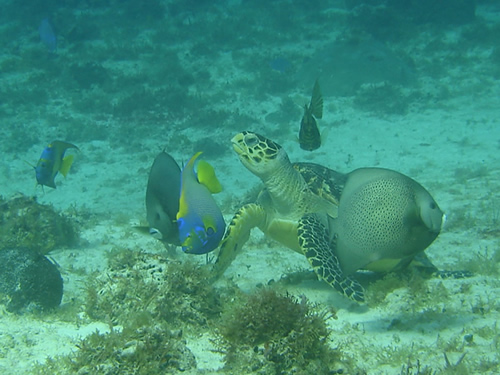
    Cozumel is a world-renowned diving destination, and for good reason. The island is home to a diverse array of marine life, including over 500 species of fish. If you’re a diver, you’re sure to see some amazing fish while exploring Cozumel’s reefs. But even if you’re not a diver, you can still learn to identify the fish you see by using our helpful fish identification guide.

    Our guide is based on the latest scientific research and includes clear photographs and detailed descriptions of each fish. You’ll learn about the fish’s size, shape, color, and habitat. You’ll also learn about their diet, behavior, and conservation status.

    Whether you’re a diver or not, our fish identification guide is a great way to learn more about the amazing marine life that lives in Cozumel.

    Colorful Reef

    Features of the Fish Guide

    • Over 500 species of fish are covered, including both common and rare species.
    • Clear photographs of each fish are included, making it easy to identify them.
    • Detailed descriptions of each fish are provided, including information on their size, shape, color, habitat, diet, behavior, and conservation status.
    • The guide is easy to use and navigate, making it a great resource for both divers and non-divers alike.

    How to Use the Guide

    1. Start by flipping through the guide and familiarizing yourself with the different types of fish that are found in Cozumel.
    2. When you see a fish that you don’t recognize, use the guide to help you identify it.
    3. The guide includes detailed descriptions of each fish, so you can learn more about their size, shape, color, habitat, diet, behavior, and conservation status.
    4. Use the guide to help you plan your next dive trip to Cozumel. By knowing what fish you can expect to see, you can make the most of your time underwater.

    Visit Our Website

    To learn more about our fish identification guide and to purchase a copy, please visit our website.

    We hope you enjoy our fish identification guide!


  • C-53 Felipe Xicotencatl: A Military Vessel Turned Reef

    C-53 Felipe Xicotencatl: A Military Vessel Turned Reef

    History

    The C-53 Felipe Xicotencatl was an Admirable-class minesweeper built in Tampa, Florida in 1944. It was commissioned into the United States Navy as USS SCUFFLES and served in the Atlantic during World War II. After the war, the ship was decommissioned and sold to the Mexican Navy, where it was renamed ARM General Felipe Xicoténcatl (C-53). The ship served with the Mexican Navy for over 30 years, patrolling the Gulf of Mexico and the Caribbean Sea.

    Artificial Reef

    In 1999, the Mexican Navy intentionally sank the C-53 Felipe Xicoténcatl to create an artificial reef. The wreck was sunk in 80 feet of water off the coast of Cozumel, Mexico. The C-53 is now a popular dive site, home to a variety of marine life, including fish, sponges, and coral. The wreck is also home to a number of interesting features, such as the ship’s propellers and guns.

    Diving the C-53 Felipe Xicotencatl

    The C-53 Felipe Xicotencatl is a great dive for all levels of divers. The wreck is relatively shallow, making it easy to access. The visibility is typically good, and the water is warm and clear. The wreck is also home to a variety of marine life, making it a great place to see fish, sponges, and coral.

    Tips for Diving the C-53 Felipe Xicotencatl

    • The C-53 is located in 80 feet of water, so you will need to be a certified diver to dive it.
    • The visibility is typically good, but it can be affected by weather conditions.
    • The water is warm and clear, so you will not need a wetsuit.
    • The wreck is home to a variety of marine life, so be sure to bring your camera.

    Conclusion

    The C-53 Felipe Xicotencatl is a great dive site for all levels of divers. The wreck is home to a variety of marine life, and it is a great place to learn about the history of the Mexican Navy. So what are you waiting for? Book your dive today and experience this amazing dive site for yourself!

    If you’re looking for a great dive in Cozumel, the C-53 Felipe Xicotencatl is a perfect option. The wreck is a great dive for all levels of divers and is home to a variety of marine life also is ideal for your Wreck Diving Specialty.

    C-53 Feipe Xicotencatl, Wreck Dive in Cozumel Island


    Keywords:

    • C-53
    • Cozumel
    • dive site
    • artificial reef
    • military aircraft
    • World War II
  • Eagle Rays in Cozumel: A Majestic Sight to Behold

    Cozumel Giants

    Spotted Eagle Rays in Cozumel: A Majestic Sight to Behold

    Spotted eagle rays are one of the most popular marine animals to see in Cozumel. These majestic creatures can often be seen swimming near the surface of the water, creating a truly awe-inspiring sight.

    Where to See this giants in Cozumel

    There are many places to see spotted eagle rays in Cozumel. Some of the best spots include:

    • Palancar Reef: This is one of the most popular dive sites in Cozumel, and it is a great place to see spotted eagle rays.
    • Coral Gardens: This is another popular dive site in Cozumel, and it is also a great place to see spotted eagle rays.
    • Santa Rosa Wall: This is a deep-water dive site that is home to a variety of marine life, including spotted eagle rays.
    • Chankanaab Park: This is a marine park located on the south side of Cozumel. It is a great place to see spotted eagle rays, as well as other marine life.

    How to See them in Cozumel

    There are a few different ways to see spotted eagle rays in Cozumel. You can:

    • Go drift diving or snorkeling: This is the best way to see spotted eagle rays up close.
    • Take a boat tour: There are many boat tours that offer the opportunity to see spotted eagle rays.
    • Visit a marine park: Marine parks like Chankanaab Park are home to a variety of marine life, including spotted eagle rays.

    Tips for Seeing Spotted Eagle Rays in Cozumel

    If you are planning on seeing spotted eagle rays in Cozumel, here are a few tips:

    • Go during the winter months: Spotted eagle rays are most abundant during the winter months.
    • Go early in the morning: Spotted eagle rays are often seen feeding near the surface of the water in the early morning hours.
    • Be patient: Spotted eagle rays can be shy, so be patient and wait for them to come to you.
    • Respect their space: Spotted eagle rays are wild animals, so it is important to respect their space. Do not touch them or get too close.

    Spotted eagle rays are truly majestic creatures, and they are a must-see for any visitor to Cozumel. With a little planning, you can easily see these amazing animals up close and create memories that will last a lifetime.

    Eagle Rays

  • Small Diving Boats in Cozumel

    Diving in Small Boats

    Small Diving Boats in Cozumel: The Best Way to Explore the Underwater World

    Cozumel is a world-renowned diving destination, and for good reason. The island is home to some of the best dive sites in the world, with crystal-clear waters and a variety of marine life. If you’re looking for the best possible diving experience, you’ll want to choose a small diving boat.

    Why Choose a Small Diving Boat?

    There are many reasons to choose a small diving boat over a larger boat. Here are just a few:

    • More Maneuverability: Small boats are more maneuverable than larger boats, which means they can get you to the best dive sites that the larger boats can’t.
    • More Personal Attention: Small boats have a smaller passenger capacity, which means you’ll get more personal attention from your crew.
    • More Comfortable: Small boats are often more comfortable than larger boats, with more space to move around and relax.
    • More Affordable: Small boats are often more affordable than larger boats, making them a great option for budget-minded divers.

    Blue Mayan Divers

    Blue Mayan Divers is a small, family-owned dive shop that offers small diving boats in Cozumel. Our boats are comfortable and well-equipped, and our experienced captains will take you to the best dive sites in the area. We offer a variety of diving packages to fit your budget and experience level.

    Book Your Dive Today!

    To book your dive with Blue Mayan Divers, please visit our website or call us at 1-800-555-1212. We look forward to seeing you in Cozumel!

    Conclusion Small Diving Boats the real deal

    Small diving boats offer a number of advantages over larger boats, making them the perfect way to explore the underwater world. If you’re looking for the best possible diving experience, be sure to choose a small diving boat.

    Keywords:

    Cozumel diving, small diving boats, Blue Mayan Divers, Cozumel dive sites, Cozumel diving experience, Cozumel diving tour, Cozumel diving boat rental

    Speed Boat with SCUBA Divers

  • Cozumel Hyperbaric Chamber: A Must-Know for Scuba Divers

    Cozumel Hyperbaric Chamber: A Must-Know for Scuba Divers

    Cozumel Hyperbaric Chamber: Scuba diving is a great way to explore the underwater world, but it’s important to be prepared for anything. That’s why it’s a good idea to know about Cozumel’s hyperbaric chamber.

    A hyperbaric chamber is a pressurized room that is used to treat decompression sickness, also known as the bends. Decompression sickness occurs when a diver ascends too quickly and nitrogen bubbles form in the blood and tissues. The hyperbaric chamber helps to reduce the size of these bubbles and relieve the symptoms of decompression sickness.

    Cozumel Hyperbaric Chamber

    Cozumel’s hyperbaric chamber is located at the International Hospital Cozumel. It is a state-of-the-art facility that can treat up to 10 patients at a time. The chamber is open 24 hours a day, 7 days a week.

    If you are a scuba diver, it is important to know about Cozumel’s hyperbaric chamber. If you ever experience decompression sickness, the chamber can help you get the treatment you need.

    Benefits of using the Cozumel  Chamber

    There are many benefits to using the Cozumel Hyperbaric Chamber. Here are just a few:

    • The chamber can help to treat decompression sickness.
    • The chamber can help to reduce the size of nitrogen bubbles in the blood and tissues.
    • The chamber can help to relieve the symptoms of decompression sickness.
    • The chamber is a safe and effective treatment for decompression sickness.

    How to use the Cozumel Chamber

    If you ever experience decompression sickness, you will need to go to the International Hospital Cozumel to use the hyperbaric chamber. The staff at the hospital will assess your condition and determine if the chamber is the right treatment for you.

    Once you are in the chamber, you will be given a mask to wear. The mask will deliver pure oxygen to your lungs. The oxygen will help to reduce the size of the nitrogen bubbles in your blood and tissues.

    Treatment Duration

    The chamber sessions will last for about an hour. During the session, you will need to stay still and avoid moving around. The staff at the hospital will monitor you closely during the session.

    After the chamber session is over, you will be able to go home. You may still feel some discomfort, but the symptoms of decompression sickness should start to improve.

    Conclusion

    The Cozumel Hyperbaric Chamber is a valuable resource for scuba divers. If you ever experience decompression sickness, the chamber can help you get the treatment you need.

    Cozumel Hyperbaric Chamber

  • PADI Rescue Diving Course: Cozumel

    PADI Rescue Diving Course: Cozumel

    PADI Rescue Diving Course: Cozumel is a popular destination for scuba diving, and for good reason. The island is home to some of the best diving in the world, with crystal-clear waters and a variety of marine life. However, even the most experienced divers can encounter emergencies underwater. That’s why it’s important to be prepared. The Rescue Diving Course can teach you the skills you need to respond to common diving emergencies.

    Benefits of taking the Rescue Diving Course

    There are many benefits to taking the Rescue Diving Lesson. Here are just a few:

    • You’ll learn how to identify and respond to common diving emergencies.
    • You’ll learn how to perform basic first aid.
    • You’ll learn how to use rescue equipment.
    • You’ll learn how to evacuate a diver in distress.
    • You’ll become a Rescue Diver, which will allow you to dive with other certified divers and to help other divers in need.

    Who should take the PADI Rescue Diving Course?

    The Rescue Diving Course is a great course for anyone who wants to learn how to be a safe and responsible diver. If you’re a certified diver, this course is a great way to learn how to help others in need.

    Requirements to take the Course

    To take the Rescue Diving Course, you must meet the following requirements:

    • Be at least 12 years old.
    • Be a certified Open Water Diver.
    • Have completed the  Emergency First Response (or equivalent) course.
    • Be in good physical condition.

    The Rescue Diving Course

    The Rescue Diving Course is a two-day course that can be taken at any PADI dive center. On the first day of the course, you will spend time in the classroom learning the theory of rescue diving. In addition, you will practice the skills you have learned in the water on the second day of the course.

    The course topics include:

    • The physics of diving emergencies
    • The physiology of stress and fatigue
    • The psychology of rescue
    • Rescue planning and organization
    • Buddy breathing
    • Self-rescue
    • Assisted rescue
    • Non-emergency assistance
    • Evacuating a diver in distress
    After completing the PADI Rescue Diving Course

    After completing the Rescue Diving Course, you’ll be awarded a Rescue Diver certification. This certification will allow you to dive with other certified divers and to help other divers in need.

    How to register for the Rescue Diving Course

    To register for the PADI Rescue Diving Course, contact Blue Mayan Divers today. We’ll be happy to help you get started.

    Conclusion

    The Rescue Diving Course is a valuable course for any scuba diver. It will teach you the skills you need to be a safe and responsible diver, and to help others in need. If you’re interested in taking the course, contact Blue Mayan Divers today.

    PADI Recue Diver in Action

  • Night Diving in Cozumel: An Unforgettable Experience

    Night Diving in Cozumel: An Unforgettable Experience

    Night Diving in Cozumel: An Unforgettable Experience 

    When the sun sets over the Caribbean, a whole new world awakens beneath the waves. Night diving in Cozumel is a surreal, bucket-list experience that transforms familiar reefs into a glowing, nocturnal playground.

    At Blue Mayan Divers, we love taking our guests out after dark to witness the ocean’s “night shift.” Here is everything you need to know about exploring Cozumel’s underwater world by torchlight.

    The Best Cozumel Night Dive Spots

    While many reefs are beautiful during the day, these three truly shine at night:

    • Paradise Reef: Often considered the #1 night dive on the island. The shallow depth allows for long bottom times to find the Endemic Splendid Toadfish and hunting octopuses.
    • Chankanaab: Known for its calm conditions, making it perfect for your very first night dive.
    • Yucab Reef: Watch as the current carries you over a landscape filled with massive lobsters and crabs that stay hidden during the day.

    What You’ll See After Dark

    Night diving reveals creatures and behaviors you simply won’t see at noon:

    • The Predators: Watch moray eels out of their holes, free-swimming and hunting.
    • The Masters of Disguise: Spot octopuses and Caribbean reef squid changing colors right before your eyes.
    • Bioluminescence: If you turn off your dive light and wave your hand, you’ll see thousands of tiny “underwater stars” sparkling in the water.

    Top 5 Tips for a Successful Night Dive

    1. Bring a Primary and a Backup Light: Never descend with just one flashlight. Always carry a secondary light in case your main one fails.
    2. Master Your Buoyancy: In the dark, it’s harder to judge your distance from the reef. Good buoyancy protects both you and the delicate coral.
    3. Use a Tank Marker: A small “tank light” or glow stick helps your dive buddy and guide keep track of you in the dark.
    4. Communicate with Your Light: Learn the hand signals for night diving! For example, circling your light on the bottom means “Look at this!” while waving it side-to-side signals an emergency.
    5. Stay Close to Your Buddy: Visibility is limited to the beam of your light. Stay within arm’s reach of your partner to ensure safety.

    Ready to See the Reef in a New Light?

    A Cozumel night dive is an experience you will never forget. Whether it’s your first time or your fiftieth, the thrill of the dark never gets old.

    Book Your Adventure: Ready to see the octopuses and bioluminescence for yourself? [Contact Blue Mayan Divers] to schedule your night dive today!

    Night Dives With US Tonight


    Night Dive in Cozumel